Multigenerational Living in Seattle: How Homes and Neighborhoods Support Extended Families
Something is changing in how American families buy homes, and Seattle's extraordinary cultural and neighborhood diversity makes it one of the Pacific Northwest's most naturally mul...

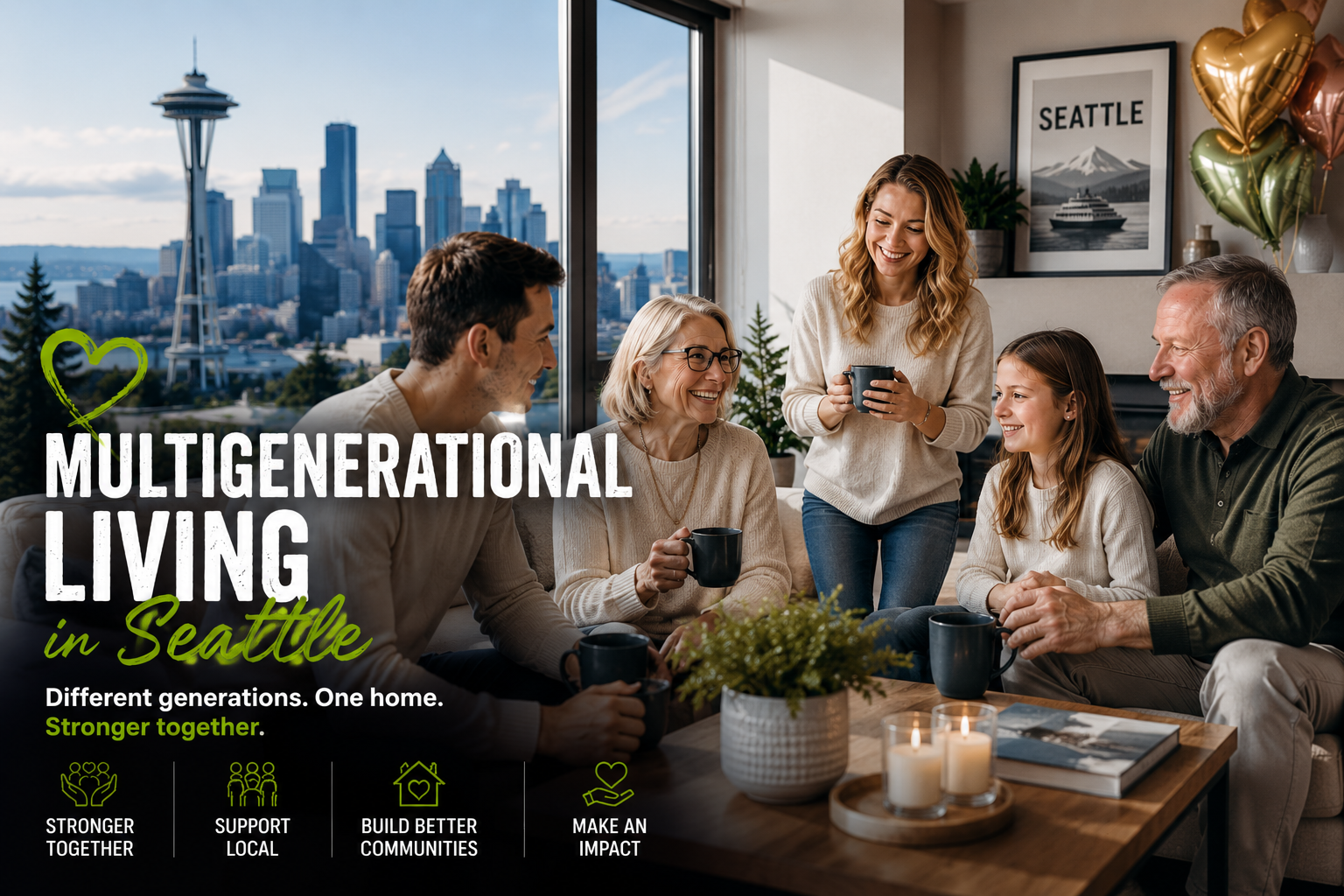
Seattle · Community Photo
Something is changing in how American families buy homes, and Seattle's extraordinary cultural and neighborhood diversity makes it one of the Pacific Northwest's most naturally multigenerational cities, reflecting housing arrangements long common in its large Asian, East African, and Latin American communities. Multigenerational homebuying reached a record 17 percent of all purchases nationally in the most recent tracking period, according to the National Association of Realtors.
Why Multigenerational Living Is Growing
According to NAR's analysis, 41 percent of recent multigenerational buyers cited caring for aging parents as the primary motivation. Cost savings ranked second at 36 percent, and adult children returning home represented 21 percent of motivations. Seattle's status as the country's second most walkable major city adds specific appeal for multigenerational arrangements, since older family members who can no longer drive retain genuine independence through transit and walkable access to services.
What to Look for in a Multigenerational Home
A genuine multigenerational home requires a private entrance, a dedicated living area, a private bathroom, and ideally a kitchenette. Seattle allows up to two ADUs per qualifying lot, one attached and one detached, with no owner-occupancy requirement since 2019 under the city's ADU ordinance. All rented ADUs must be registered under the Rental Registration and Inspection Ordinance, but family-occupied units require no registration, making Seattle's ADU framework one of the most permissive in the country for multigenerational use.
Neighborhoods and Homes in Seattle That Fit
Seattle's most established multigenerational neighborhoods include Beacon Hill, Columbia City, Rainier Valley, and the Central District, all offering larger lot sizes, established community infrastructure, and culturally connected businesses and services that make extended family life genuinely practical. North Seattle neighborhoods like Northgate and Lake City benefit from Link Light Rail access, adding transit options that reduce driving dependence for older family members. Habitat for Humanity Portland Region's NextGen-style builds and builders like JayMarc Homes offer purpose-designed floor plans with private suites for the greater Seattle area.
Financing Considerations for Multigenerational Buyers
Fannie Mae's HomeReady loan program allows income from non-borrower family members who will live in the home to count toward qualifying for a larger mortgage, a meaningful benefit in Seattle's $865,000 median market. FHA loans permit family co-borrowers even for non-primary-residence family members. Seattle's ADU lending market has matured considerably in recent years, with several lenders offering construction loans and renovation financing specifically for ADU additions.
Explore home options for every stage of life on Explore Seattle. Looking for a home that works for your whole family? Connect with Ed Laine.
Sources: nar.realtor, propertymanagersseattle.com, lennar.com, caringrealestate.com, housingwire.com
Every Thursday — local news, events, deals, and new listings. Free forever.